

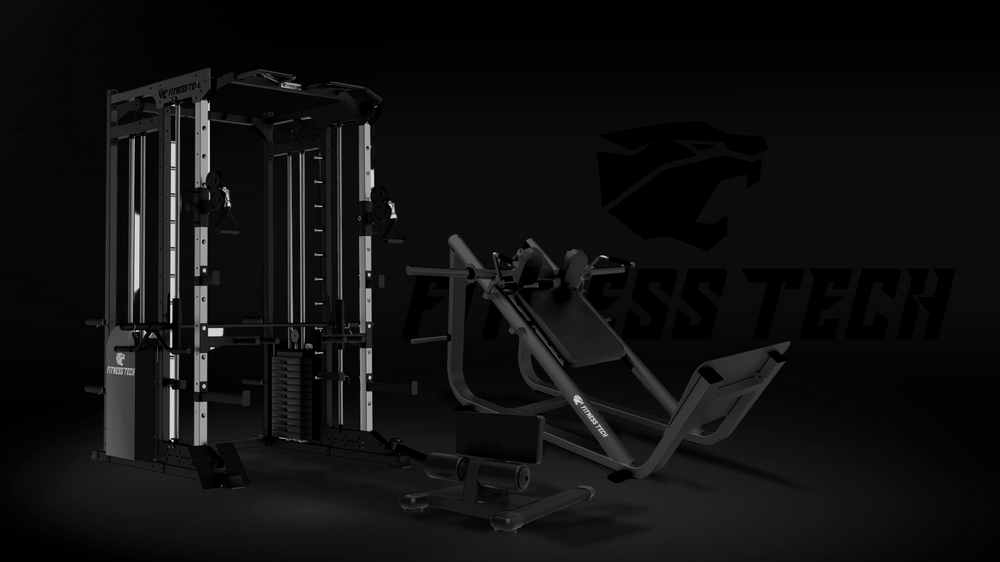


At Fitness Tech, our selection of cardio machines is designed for those looking to improve endurance, cardiovascular health, and calorie burning safely and effectively. Each piece of equipment combines guided movement, advanced connectivity, and durability, allowing for high-intensity workouts or low-impact sessions, adapting to all types of users and training goals.
These machines are ideal for both home gyms and semi-professional or commercial gyms, offering versatility and performance for complete and safe training.
Buy your cardio equipment with 24–48 hour shipping
With our fast 24–48 hour shipping, your machine will arrive ready to train. Each unit includes resistance adjustments, a controlled power motor, and optional connectivity for HRC/HIIT programs and metric tracking. The design allows smooth transitions between exercises, optimizing the intensity and efficiency of each session.
What cardio machines are and what they are used for
Cardio machines help improve cardiovascular capacity, increase physical endurance, optimize calorie burning, and tone muscles in a balanced way. The most notable types include treadmills, stationary bikes, ellipticals, rowing machines, Air Bikes, and steppers.
They are designed to offer safe workouts, both low-impact and high-intensity, adapting to different levels and goals.
Benefits of cardiovascular training
- Improvement of cardiovascular health and circulation.
- Increase in endurance and aerobic capacity.
- Optimization of calorie burning and weight control.
- Muscle toning of secondary areas such as legs, glutes, and core.
- Adaptation for supervised rehabilitation programs.
- Improvement of coordination and mental endurance.
Difference between high-impact and low-impact cardio
Treadmill: higher joint impact, ideal for calorie burning and simulating running on real terrain.
Ellipticals, cross trainers, and Air Bike: low-impact cardio, protecting joints and useful for rehabilitation or active recovery sessions.
Types of cardio machines for gyms
Professional treadmills
Treadmills with powerful motors, controlled maximum speed, adjustable incline, and advanced cushioning. They allow high-performance training and personalized HRC/HIIT programs.
Stationary and spinning bikes
Bikes with magnetic or electromagnetic resistance, pulse monitoring, and app connectivity. Ideal for cardiovascular training, leg toning, and low-impact sessions.
Elliptical machines and cross trainers
Combine arm and leg movement, protecting joints and increasing cardiovascular endurance. Predefined programs allow personalized training.
Rowing machines
Work both upper and lower body simultaneously, combining strength and cardio. Adjustable resistance for all user types.
Climbers and steppers
Machines with progressive intensity programs that maximize calorie expenditure while maintaining low joint impact, allowing HIIT or prolonged endurance training.
Technical features that make the difference
Motor power and maximum speed in treadmills
Motors with continuous adjustment for speeds of 18–22 km/h, with integrated HRC/HIIT programs.
Types of resistance
Magnetic, electromagnetic, air, and water, allowing intensity to be adapted to the user’s level and goal.
Display, connectivity, and training apps
Integration with Zwift, Kinomap, ANT+, and mobile apps, as well as HD screens for metric tracking, personalized programs, and progress analysis.
How to choose your cardio machine
Consider available space, main objective, user level, and type of machine. Adjust your choice depending on whether you train at home, in a semi-professional gym, or a commercial facility.
According to the environment
Machines adapt to different spaces, ensuring optimal performance and safety, from home workouts to intensive commercial use.
According to the goal
Each machine allows adjustment of intensity, resistance, and training programs to meet goals safely and efficiently.
Maintenance of cardio machines
- Periodic lubrication of rollers and belts for smooth operation.
- Regular cleaning of casing, display, and sensors to prevent dust buildup.
- Calibration of motor and electronic components every 3–6 months.
- Safety inspection of cables, pulleys, and moving parts before intense sessions.
- Software and app updates to maintain connectivity and metric tracking.
Financing and technical service
At Fitness Tech, we offer flexible financing options from 3 to 24 months, tailored to your budget, so you can access the equipment you need without compromising your finances.
Our professional technical service includes support, maintenance, periodic inspections, and parts repair, ensuring your machine functions correctly. Shipping is done within 24–48 hours, so you can start training immediately and with complete peace of mind.